
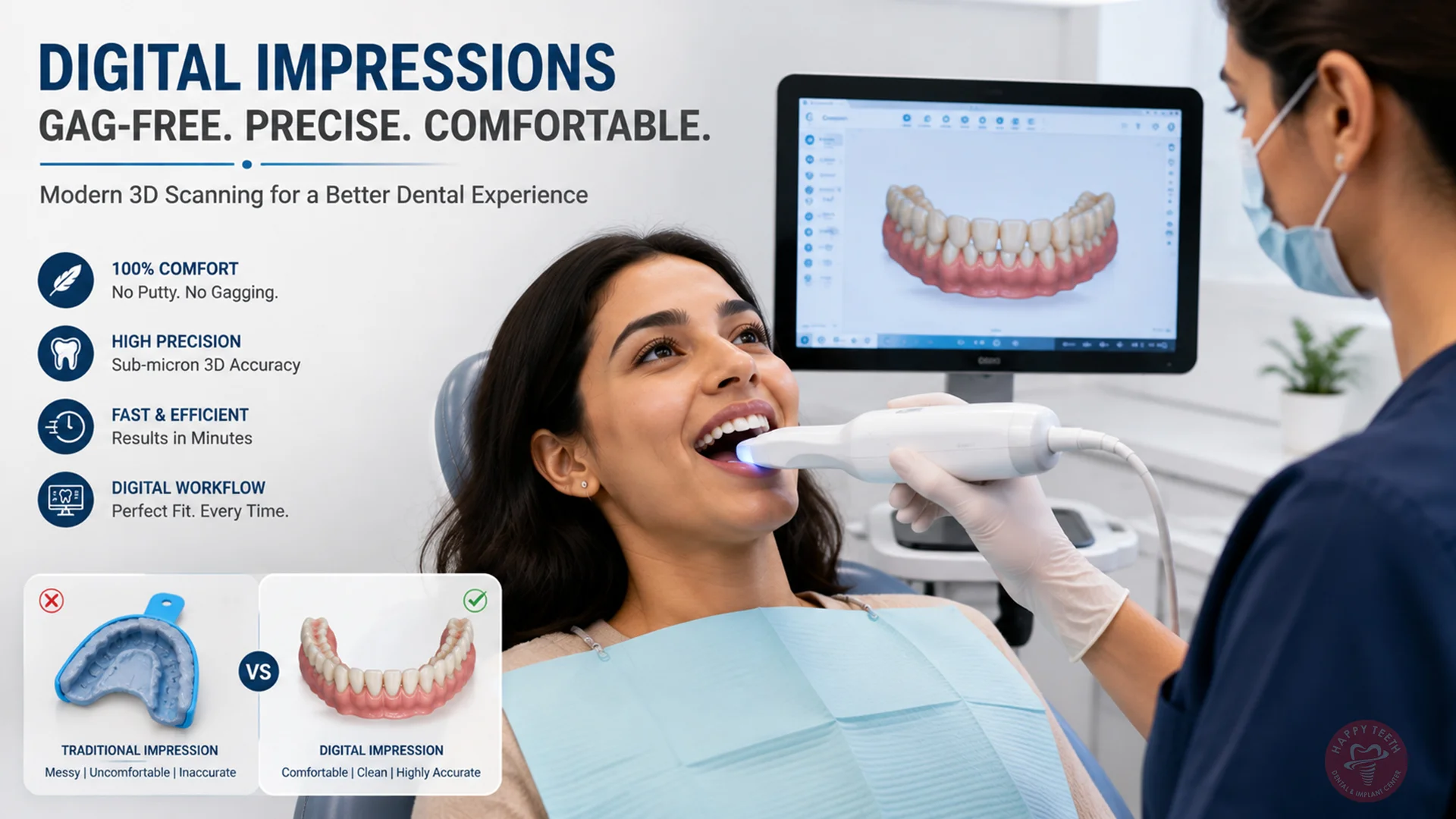
No Putty, No Gagging: Why Digital Intraoral Scanners are Changing Modern Dentistry
For decades, one specific part of visiting the dentist has caused collective dread for patients of all ages: taking physical tooth impressions. Almost everyone remembers the discomfort of having a large, metal or plastic tray crammed into their mouth, overflowing with thick, cold, and foul-tasting impression putty. Sitting completely still while trying not to gag as the heavy material sets over several long minutes is a core memory for anyone who has ever needed braces, crowns, or night guards. For children, seniors, and adults with a hyperactive gag reflex or limited jaw opening, this single step often caused so much anxiety that they delayed necessary dental care for years.
Fortunately, modern dental technology has permanently retired those messy putty trays. The arrival of advanced 3D intraoral surface scanners has revolutionized how dental architectures are captured, replacing cold chemical pastes with gentle, high-speed optical light. By choosing modern digital impressions in Ludhiana, patients can now enjoy a fast, completely clean, and 100% comfortable diagnostic experience.
At Happy Teeth Dental & Implant Centre, centrally located near Punjab Mata Nagar Chowk, we have embraced a 100% digital workflow to ensure that visiting the dentist is a peaceful, fear-free experience. Guided by Dr. Simranjeet Singh, an expert Dentist in Ludhiana, our practice utilizes state-of-the-art optical wands that capture thousands of 3D visual frames per second. Whether you are seeking custom porcelain crowns, dental bridges, or clear aligners, this comprehensive guide explains how digital scanning technology is changing dentistry for the better.
- The Nightmare of Traditional Putty Molds: Why Patients Dreaded Impressions
To fully appreciate the comfort offered by modern digital intraoral scanners, it helps to review the physiological and physical drawbacks of old-fashioned impression techniques.
Traditional impression taking relied on viscous chemical materials like alginate, condensation silicone, or polyvinyl siloxane (PVS). While these materials served dentistry for generations, the process of taking manual molds was filled with friction:
- Triggering the Pharyngeal Reflex: When a tray filled with soft putty is pressed against the roof of the mouth or the back molars, excess paste often oozes backward toward the throat. This immediately triggers the body’s natural pharyngeal (gag) reflex, causing intense panic, coughing, and swallowing discomfort.
- Jaw Joint Fatigue and Strain: Patients were required to hold an uncomfortable, wide-mouth position for up to five minutes while the chemical mixture set. For seniors with temporomandibular joint (TMJ) issues or arthritis, maintaining this position caused severe joint soreness.
- Distortion and Material Tearing: Physical impression materials are vulnerable to physical errors. If a patient moved slightly, swallowed, or gasped during the setting phase, the putty would tear or distort. The dentist then had no choice but to throw the mold away and repeat the entire messy process from scratch.
- Unpleasant Tastes and Chemical Residue: Even flavored impression materials left a sticky, chalky film inside the mouth that required extensive rinsing and scraping to remove after the appointment.
This unpleasant physical experience created significant dental phobia, leading many local residents to put off necessary restorative treatments.
- The Science of 3D Optical Scanning: How Intraoral Wands Work
Modern optical wands eliminate physical materials entirely, relying instead on sophisticated physics, high-definition digital optics, and real-time computing to map your smile.
An intraoral scanner is a compact, ergonomically designed handheld wand equipped with high-speed visual sensors, tiny cameras, and a safe light source (such as structured LED light or laser projection). Rather than taking a single static picture, the scanner operates more like a high-precision 3D video camera.
The Step-by-Step Scanning Physics
- Structured Light Projection: As Dr. Simranjeet Singh glides the smooth, autoclavable wand tip a few millimeters above your teeth, the device projects a known pattern of safe light onto your tooth enamel and gum tissues.
- Surface Deformation and Triangulation: As the light hits the complex curves, grooves, and margins of your teeth, the light pattern deforms. High-resolution optical sensors record these micro-deformations thousands of times per second.
- Real-Time Point Cloud Generation: Advanced onboard software calculates the exact spatial coordinates (depth, width, and height) of millions of individual surface points, constructing a dense 3D point cloud in real-time.
- Algorithmic Mesh Stitching: Intelligent software algorithms stitch these visual frames together instantly, displaying a full-color, high-definition 3D digital model of your teeth on a chairside HD monitor as the scan takes place.
Because the scanner uses light waves instead of physical pressure, the entire scanning process is completely dry, touchless, and silent.
- Solving Sensitive Gag Reflexes and Limited Jaw Mobility
The primary advantage of opting for digital impressions in Ludhiana is the total elimination of gagging and jaw strain during your appointment.
For individuals who experience severe anxiety at the thought of traditional molds, intraoral scanning provides complete physical control and emotional peace of mind.
Why Digital Scanners Are 100% Gag-Free
- Slim, Ergonomic Design: The tip of a modern intraoral wand is no larger than a standard electric toothbrush head. It moves smoothly along the cheek corridors and tooth surfaces without touching the soft palate or triggering the back of the throat.
- The Ability to Pause Anytime: Unlike chemical putty trays—which are completely ruined if removed before the timer expires—a digital scan can be paused at any second. If you need to swallow, take a sip of water, clear your throat, or rest your jaw, the dentist simply lifts the wand. The computer freezes the 3D model, and scanning resumes seamlessly from the exact same spot whenever you are ready.
- Minimal Jaw Opening Required: Traditional impression trays required a wide, forceful jaw opening to slide the bulky metal frame inside. Intraoral wands require only a comfortable, partial opening, making the process effortless for seniors, children, or individuals with limited jaw mobility.
By removing physical discomfort from the diagnostic phase, patients who previously avoided the dentist due to gag fears can now undergo comprehensive treatments with total confidence.
- Unmatched Digital Accuracy: Sub-Micron Precision for Restorations
Beyond superior patient comfort, the primary clinical reason dentists are transitioning to a 100% digital workflow is the unmatched structural accuracy provided by 3D optical data.
In traditional dentistry, every manual step between taking a putty mold and producing a final crown introduced small physical errors. The putty could shrink during cooling, the stone plaster poured into the mold could expand, and the wax used by lab technicians could distort under temperature changes. These cumulative errors frequently resulted in crowns or bridges that felt tight, sat too high on the bite, or left microscopic gaps along the gumline.
How Sub-Micron Precision Improves Your Dental Care
- Eliminating Dimensional Distortion: Digital 3D files (such as STL or PLY datasets) never shrink, warp, expand, or degrade over time. The digital scan captured in our clinic near the Indoor Stadium matches your natural tooth anatomy with micron-level accuracy.
- Flawless Crown and Bridge Fit: When high-resolution digital files are sent to computer-guided CAD/CAM milling units, custom Zirconia crowns are carved to match your exact enamel margins. The crown fits smoothly on the first try, drastically reducing chair time and eliminating the need for frustrating manual adjustments.
- Predictable Clear Aligner Planning: For patients undergoing orthodontic alignment, digital scans allow software to calculate the exact, sub-millimeter movement of every single tooth across each aligner stage. You can even view a 3D visual simulation of how your teeth will look after treatment before you even start wearing your first set of trays.
To see how high-precision 3D scanning combines with computer-aided manufacturing to speed up smile makeovers for visiting travelers, read our detailed guide on Digital Dentistry in India.
- Side-by-Side Comparison: Traditional Putty Molds vs. Modern Digital Impressions
Comparing how these two impression techniques perform across everyday clinical factors highlights why physical putty trays are rapidly becoming obsolete:
- Patient Comfort Level: Traditional putty molds carry a high risk of triggering a gag reflex, causing cold chemical messes, and causing jaw fatigue. Digital optical scans are 100% gag-free, dry, non-invasive, and completely comfortable.
- Impression Capture Speed: Manual molds require 3 to 5 minutes of continuous mouth holding per arch, often requiring retakes. Digital wands capture a complete, high-definition 3D full-arch scan in under 60 seconds.
- Process Flexibility: Manual impression trays cannot be removed mid-process without ruining the mold. Digital intraoral scans can be paused and resumed at any second whenever the patient needs a rest.
- Data Transmission to Labs: Physical molds require packaging, courier pickup, and road or air shipping over several days. Digital 3D STL files are transmitted instantly to CAD/CAM design centers via encrypted cloud channels in seconds.
- Marginal and Structural Accuracy: Putty molds are subject to thermal shrinkage, tearing, and plaster expansion errors. Digital 3D surface scanning provides sub-micron accuracy that ensures a comfortable, precise fit on the first try.
- Streamlined Turnaround Times: From Chairside Scan to Manufacturing
In addition to eliminating gagging, choosing digital impressions in Ludhiana drastically shortens the overall turnaround time required to receive your final crowns, bridges, or custom aligners.
In traditional dentistry, physical molds had to be sanitized, boxed, and transported by courier to external dental laboratories. This shipping phase alone added three to seven days to a patient’s treatment timeline.
The Accelerated Digital Highway
With an intraoral digital wand, physical shipping is replaced by instant electronic file transfer. The moment Dr. Simranjeet Singh completes your 3D optical scan, the electronic file is reviewed on screen and uploaded directly to specialized CAD/CAM laboratory software.
Dental technicians open your 3D digital model within minutes, design your restoration on screen, and send the blueprint directly to high-precision robotic milling machines. What used to take two weeks of physical transit and manual wax casting can now be completed in just 24 to 48 hours.
For busy working professionals in SBS Nagar or international patients visiting Punjab on tight vacation schedules, this accelerated turnaround means completing complex treatments in a fraction of the traditional time.
- Transforming the Dental Experience for Kids and Seniors
Two specific patient groups benefit most dramatically from the transition to 100% digital intraoral scanning: young children and elderly adults.
Pediatric Dentistry Without Fear
For young children, sitting still for several minutes with a mouth full of heavy, cold putty is often an impossible task. Children quickly become overwhelmed, swallow material, or cry, making physical impressions a major barrier to pediatric care.
In contrast, children find 3D digital scanning fascinating and fun. Our clinical team introduces the ergonomic scanning wand as a “magic camera.” Children love watching an exact, colorful 3D model of their own teeth appear instantly on the chairside HD screen as the wand moves. Turning a diagnostic step into an interactive visual game eliminates fear and builds positive dental habits that last a lifetime.
Gentle, Dignified Care for Seniors
For aging parents and senior patients, limited jaw opening, fragile oral tissues, or missing teeth can make physical tray insertion physically painful. The smooth, non-contact motion of an optical wand glides over delicate gums without causing pressure or friction. Seniors can rest their jaws comfortably throughout the brief appointment, receiving high-end restorative care with complete dignity and ease.
- Official Clinical Policy and Technology Consensus
The rapid global adoption of intraoral 3D scanning is supported by leading international health and dental organizations, confirming its role as the gold standard for modern oral diagnostics.
Global Policy Consensus: The American Dental Association (ADA) recognizes that digital intraoral scanning and CAD/CAM workflows enhance diagnostic precision, improve patient comfort, reduce chairside treatment time, and deliver highly predictable clinical outcomes across restorative and orthodontic dentistry.
By replacing manual impression methods with certified digital technology, Happy Teeth Dental aligns its clinical standards with top healthcare institutions worldwide.
- Why Happy Teeth Dental is Ludhiana’s Leader in Comfortable Care
Investing in advanced 3D digital equipment is truly meaningful only when delivered with a patient-first, compassionate philosophy. At Happy Teeth Dental & Implant Centre, we have designed our entire clinical experience around making your visits as comfortable, transparent, and relaxed as possible.
Located near Punjab Mata Nagar Chowk in SBS Nagar, our modern facility offers a peaceful, welcoming environment equipped with the latest high-speed intraoral optical scanners. Dr. Simranjeet Singh and our dedicated team take the time to explain every step of your digital scan, show you your 3D smile model on screen, and move at a pace that keeps you completely at ease. We take immense pride in replacing old dental fears with modern digital comfort.
Experience Gag-Free, 100% Comfortable Dental Care Today
You no longer have to let the fear of messy putty trays, uncomfortable gagging, or long waiting times stand between you and a healthy, beautiful smile. Thanks to the power of high-speed 3D digital impressions in Ludhiana, achieving flawless crowns, bridges, and clear aligners is now a fast, clean, and completely comfortable process.
At Happy Teeth Dental & Implant Centre, we are ready to show you how easy modern dentistry can be. Experience the speed, accuracy, and comfort of 3D intraoral scanning for yourself.
Don’t let impression anxiety hold you back any longer. Book an Appointment Online with Dr. Simranjeet Singh near Punjab Mata Nagar Chowk today, and discover the true comfort of a 100% digital smile transformation!
High-precision 3D digital dentistry engineered for your complete comfort.
- Practice Name: Happy Teeth Dental & Implant Centre
- Chief Dentist & Implantologist: Dr. Simranjeet Singh
- Location Profile: Punjab Mata Nagar Chowk, Near Indoor Stadium, SBS Nagar, Ludhiana, PB 141002
- Direct Clinical Helpline: (0) 87290 – 00980