
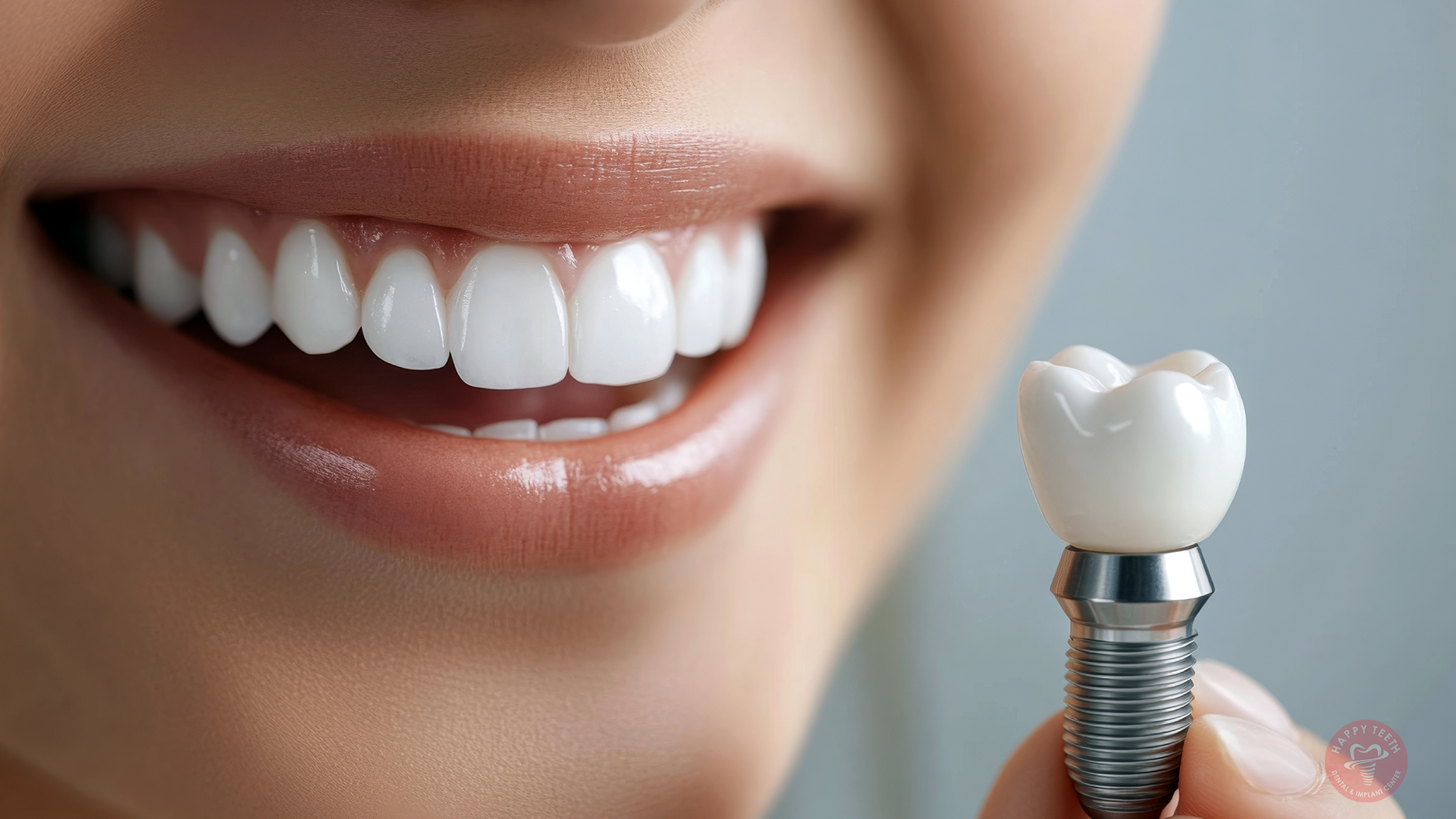
Caring for Dental Implants: Tips to Ensure Long-Term Success
Caring for Dental Implants is the single most critical factor in determining the lifespan of your restorative treatment. While a dental implant is engineered to be a lifelong replacement for a missing tooth, its “permanence” depends heavily on how you treat it once the surgical phase is over. Unlike natural teeth, which are held in place by a periodontal ligament, implants are fused directly to the bone. This unique structure requires a specific approach to hygiene and maintenance.
At Happy Teeth Dental & Implant Centre, we emphasize that post-surgical care is a partnership between the patient and the clinician. Under the guidance of Dr. Simranjeet Singh, recognized as the Best Dentist in Ludhiana, we help our patients in Punjab Mata Nagar transition from surgery to a lifetime of healthy, functional smiles.
- The Biological Importance of Maintenance
To master Caring for Dental Implants, you must first understand the biological environment. While a titanium post cannot develop a cavity, the living tissue surrounding it—the gums and the bone—is susceptible to infection.
The primary threat to an implant is a condition called peri-implantitis. This is an inflammatory disease that causes the bone around the implant to recede. If left unchecked, the implant can lose its stability and eventually fail. This is why our team at the Best Dental Clinic in Ludhiana focuses so heavily on plaque control; preventing bacterial buildup is the only way to safeguard your investment.
- Establishing a Specialized Daily Routine
When you begin Caring for Dental Implants at home, your standard brushing routine needs an upgrade. Consistency is key, but the tools you use are equally important.
Choose a Soft-Bristled Brush
Hard bristles can cause microscopic scratches on the surface of the abutment or cause the gums to recede, exposing the metal. Dr. Simranjeet Singh recommends using a soft manual brush or, ideally, an electric toothbrush with a “sensitive” setting. Electric brushes are particularly effective at vibrating plaque away from the “cuff” where the crown meets the gum line.
Use Low-Abrasive Toothpaste
Avoid toothpastes marketed for “intense whitening” or those containing baking soda and harsh grits. These abrasives can wear down the glaze on your porcelain crown over time. Stick to a standard fluoride toothpaste that is gentle on dental restorations.
- The Art of “Implant-Specific” Flossing
Traditional string floss is often insufficient for Caring for Dental Implants because of the way the crown is shaped. The base of an implant crown is usually narrower than the top, creating small “pockets” where food and bacteria can hide.
- Interdental Brushes: These are perhaps the most vital tool in your arsenal. They are small, cylindrical brushes that slide between the teeth. Ensure you use a plastic-coated wire version; metal wires can scratch the titanium implant surface.
- Water Flossers (Oral Irrigators): For many patients at our clinic in Punjab Mata Nagar, water flossers are a game-changer. They use a pressurized stream of water to flush out bacteria from deep within the gum sulcus where brushes cannot reach.
- Floss Threaders: If you have an implant-supported bridge, a floss threader allows you to pull specialized floss underneath the bridge to clean the space between the restoration and the gums.
- Dietary Habits and Lifestyle Adjustments
Your lifestyle choices have a direct impact on the success of your implants. Caring for Dental Implants involves being mindful of what you put in your body and how you use your teeth.
The Danger of Smoking
Smoking is the leading risk factor for implant failure. It reduces blood flow to the jawbone and gums, which significantly impairs the body’s ability to fight off infection and heal. If you are an implant patient, quitting smoking is the best thing you can do to ensure long-term success.
Mindful Eating
While implants restore nearly 100% of your chewing power, they are not indestructible. Avoid biting directly into extremely hard objects like ice cubes, hard candy, or unpopped popcorn kernels. These can fracture the porcelain crown, requiring a replacement.
- Managing Stress and Bruxism (Teeth Grinding)
Implants lack the natural “shock absorber” (the periodontal ligament) found in natural teeth. This means that excessive force, such as that caused by nocturnal teeth grinding (bruxism), is transferred directly to the bone.
If you have a history of grinding, Dr. Simranjeet Singh will likely recommend a custom-fitted nightguard. This protective appliance cushions the teeth and prevents the immense pressure from loosening the implant or chipping the restoration. As the Best Dentist in Ludhiana, he ensures that these guards are perfectly balanced to protect your alignment and your implants.
- Why Professional Check-ups are Non-Negotiable
Even the most diligent home care cannot replace professional maintenance at the Best Dental Clinic in Ludhiana. During your six-monthly visits, we perform several critical tasks:
- Radiographic Monitoring: We take periodic X-rays to ensure the bone levels around the implant remain stable.
- Specialized Scaling: Our hygienists use resin or carbon-fiber instruments to remove hardened tartar (calculus) from the implant without damaging the titanium.
- Occlusal Check: We check your bite to ensure your natural teeth haven’t shifted in a way that puts uneven pressure on the implant.
Regular monitoring at our Punjab Mata Nagar facility allows us to catch minor issues like “peri-implant mucositis” (early gum inflammation) before it turns into bone loss.
- Recognizing the Warning Signs
Successful Caring for Dental Implants also means being an observant patient. You should contact Happy Teeth Dental & Implant Centre immediately if you notice:
- Persistent Bleeding: Gums around a healthy implant should never bleed when brushing or flossing.
- Visible Threading: If you can see the metal “threads” of the implant through the gum line.
- A “Loose” Feeling: If the crown feels like it is wiggling, the screw might be loose, or the implant itself could be failing.
- Unusual Discomfort: While some sensitivity is normal shortly after surgery, long-term pain is a red flag.
- The Link Between Systemic Health and Implants
Recent research has shown that conditions like uncontrolled diabetes or osteoporosis can affect how the bone maintains its bond with the implant. Part of Caring for Dental Implants is managing your overall health. Keeping your blood sugar in check and maintaining a diet rich in Calcium and Vitamin D supports the bone density required to keep the implant anchored.
Conclusion: A Lifetime of Confidence
Investing in dental implants is one of the best decisions you can make for your quality of life. By committing to a thorough routine for Caring for Dental Implants, you are ensuring that your investment pays off for decades to come.
At Happy Teeth Dental & Implant Centre, we are proud to be a trusted resource for patients seeking the Best Dental Clinic in Ludhiana. With the expert oversight of Dr. Simranjeet Singh, we provide the localized, high-tech care you need to keep your smile bright and healthy.
Whether you are just starting your implant journey or looking for a professional team to help maintain your existing restorations, our clinic near Punjab Mata Nagar Chowk is here to support you every step of the way.
External Resources
- Learn more about implant maintenance from the American Academy of Periodontology (External Link: https://www.perio.org/).
- Research the link between systemic health and dental success at the Journal of Oral Implantology (External Link: https://www.joionline.org/).
Protect your smile today with expert care!
- Visit Us: Punjab Mata Nagar Chowk, Near Indoor Stadium, Ludhiana, PB 141002
- Contact the Best Dentist in Ludhiana: (0) 87290 – 00980
- Schedule Online: https://dentistinludhiana.com/book-an-appointment/