
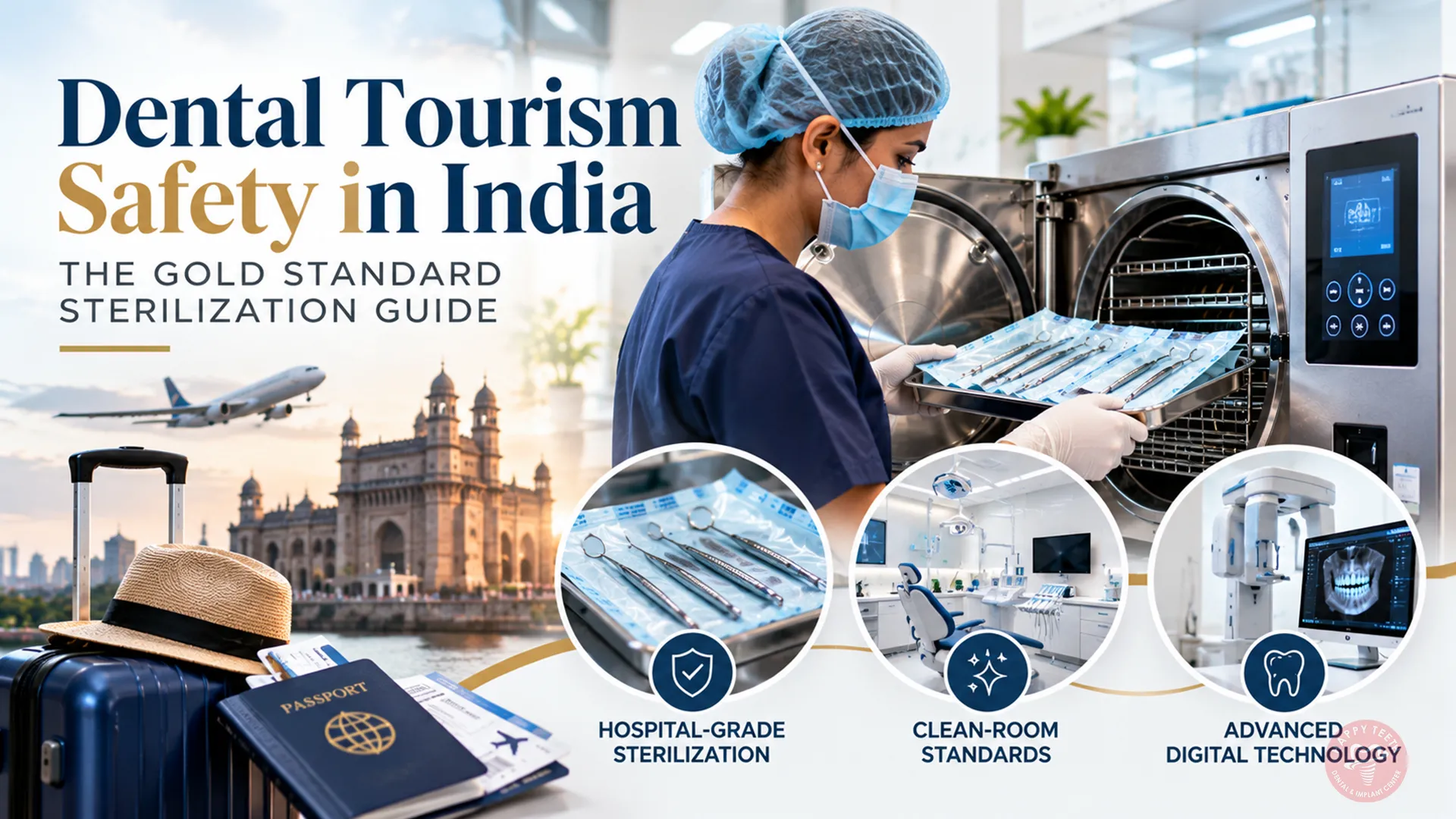
Beyond Borders: Evaluating Sterilization and Safety Standards in India
For Non-Resident Indians (NRIs) and international patients living in Canada, the United Kingdom, the United States, Australia, and across Europe, traveling abroad for restorative and cosmetic dental care offers clear advantages. Significant financial savings, the absence of insurance waiting lists, and the opportunity to combine dental transformations with a holiday back home make traveling to Punjab an appealing choice. Yet, behind the excitement of planning a trip, international travelers often share one critical, unspoken concern: How clean is the clinic, and how safe is the treatment?
In cross-border healthcare, hygiene is non-negotiable. Concerns regarding instrument sterilization, water quality, and cross-contamination can cause hesitation when considering medical travel. Fortunately, premier private clinics in India have eliminated this concern by adopting hospital-grade biosafety standards that rival or exceed Western healthcare institutions. When evaluating verified dental tourism safety in India, patients discover that premier practices adhere to strict international hygiene guidelines, operate Class B vacuum autoclaves, and implement complete clean-room protocols.
At Happy Teeth Dental & Implant Centre, located near Punjab Mata Nagar Chowk, we view clinical safety as the cornerstone of exceptional patient care. Under the clinical direction of Dr. Simranjeet Singh, an expert Dentist in Ludhiana, our practice operates a multi-tier sterilization ecosystem designed to protect both our domestic patients and visiting overseas families. Whether you are visiting for routine maintenance or complex restorative procedures, this guide explains how modern private practices in India maintain absolute sterility, transparency, and safety.
Demystifying Dental Tourism Safety in India: Addressing the Core Fear
When international patients hesitate to book care abroad, their hesitation rarely stems from doubts about clinical skill. Indian dental surgeons and specialists are widely recognized for their clinical dexterity, academic training, and diagnostic expertise. Instead, the hesitation centers almost entirely on environmental safety and infection control.
International travelers frequently ask reasonable questions:
- Are instruments completely sterile, or are they merely wiped clean between appointments?
- How does the clinic prevent cross-contamination between patients?
- Is the water running through the dental drill clean and safe?
- Does the facility follow documented international disinfection guidelines?
Modern dental tourism safety in India is built on complete clinical transparency. Premier private dental clinics have moved far beyond basic disinfection by adopting fractional pre-vacuum autoclaving, individual sterile pouching, clinical-grade air purification, and closed water delivery systems. By making every step of the infection-control chain verifiable, patients can receive high-end restorative treatments with absolute peace of mind.
The Heart of Asepsis: The Multi-Tier Sterilization Cycle
True sterilization does not mean simply soaking instruments in antiseptic liquid or wiping them with alcohol. In a modern healthcare environment, surgical instrument processing follows a strict, multi-stage physical and biological cycle designed to destroy all microbial life, including microscopic bacteria, fungal spores, and viruses.
At Happy Teeth Dental, every reusable diagnostic and surgical instrument passes through a documented, hospital-grade sterilization sequence before it ever touches a patient.
The Step-by-Step Sterilization Pathway
- Manual Decontamination and Ultrasonic Cleansing: Following a clinical appointment, instruments are placed in an enzymatic bath to break down organic debris. They are then placed in an ultrasonic cleaning bath, where high-frequency sound waves create microscopic cavitation bubbles that scrub deep grooves, hinges, and serrations far more thoroughly than manual brushing alone.
- Rinsing and Microscopic Inspection: Instruments are rinsed with purified water, dried completely, and inspected under illuminated magnification to confirm that surfaces are entirely free of residue.
- Individual Medical-Grade Pouching: Instruments are sealed inside specialized medical pouches featuring clear plastic fronts and medical-grade paper backings. Each pouch incorporates chemical vapor indicators that change color when optimal sterilization parameters are achieved.
- Class B Fractional Pre-Vacuum Autoclaving: Instruments are processed inside a Class B medical autoclave. Unlike basic countertop autoclaves, a Class B unit uses a fractional vacuum pump to extract 99.9% of air from the chamber before injecting high-pressure steam at 134°C (273°F). This pre-vacuum phase ensures that pressurized steam penetrates deep inside hollow dental handpieces, micro-tubing, and sealed pouches.
- Color-Indicator Verification: Once the cycle completes and instruments are dried, the chemical indicator strip on each pouch is inspected. The visible color transition confirms that the contents were exposed to the exact temperature, pressure, and duration required for complete sterility.
- Aseptic Cabinet Storage: Sterilized pouches are stored in dedicated, UV-disinfected storage cabinets. The sterile seal on your instrument pouch is broken only in front of you at the start of your appointment.
Clean-Room Protocols: Operatory Safety and Biofilm Management
Environmental safety extends far beyond instruments alone. Every surface, waterline, and air current within the operatory must be managed to prevent cross-contamination.
Maintaining hospital-grade clean-room standards requires a multi-layered defense strategy:
Surface Disinfection and Impervious Barrier Protection
Between every patient appointment, clinical operatories undergo a complete turnover protocol. Every high-touch surface—including dental chair controls, overhead LED light handles, bracket tables, and delivery units—is sanitized with hospital-grade surface disinfectants. Crucial touch points are then sealed with single-use, medical-grade plastic barrier wraps that are discarded and replaced after each patient.
Closed Dental Unit Waterline (DUWL) Systems
A common concern among international travelers is water safety during treatment. At Happy Teeth Dental, our dental delivery units do not rely on municipal tap water. Instead, our operatories use independent, closed-circuit water systems filled with medical-grade distilled and reverse-osmosis (RO) purified water treated with continuous antimicrobial solutions. This prevents the formation of internal bacterial biofilms, ensuring that the water mist cooling your tooth during treatment is completely pure.
Air Filtration and Clinical Aerosol Mitigation
Operatory air quality is maintained through advanced high-efficiency particulate air (HEPA) filtration units combined with continuous ultraviolet (UV-C) air sanitation. These units cycle clinical air continuously, capturing airborne micro-particles, bacteria, and aerosol mists produced during routine dental procedures.
How Digital Diagnostics and Dental Lasers Minimize Contamination Risks
Modern dental technology does more than just speed up appointments; it fundamentally reduces biological exposure and cross-contamination risks for patients.
By shifting to an entirely digital, touchless diagnostic and clinical workflow, modern clinics minimize the physical variables that previously introduced infection risks into dental care.
Touchless 3D Intraoral Scanning vs. Messy Putty Trays
In traditional dental care, taking tooth impressions required biting into bulky trays loaded with wet chemical putty. These physical molds had to be disinfected, wrapped, and shipped across cities via courier to commercial laboratories, creating numerous points of physical handling and potential contamination.
Using an advanced Intraoral Scanner, an ergonomic optical wand captures thousands of 3D visual frames per second with safe light beams. The scanning tip is fully autoclavable, and the resulting impression is an electronic 3D file transmitted to our Digital Treatment Planning (AI Tools) via encrypted cloud channels. There are no wet molds, no courier packages, and zero cross-contamination risks.
The Bactericidal Action of Soft-Tissue Dental Lasers
When performing periodontal therapy or surgical preparations, soft-tissue dental lasers replace traditional mechanical scalpels. The focused light energy emitted by the laser vaporizes targeted tissue while instantly cauterizing surrounding blood vessels and destroying 99.9% of local bacteria on contact. This creates a sterile, sealed surgical margin that significantly lowers the risk of post-operative bacterial infections and accelerates soft-tissue healing.
Combined with instant, low-radiation Digital X-Rays and panoramic Full Mouth X-Rays (OPG), patients receive comprehensive diagnostic evaluations without unnecessary physical contact or biological exposure.
Western Hospital Benchmarks vs. Happy Teeth Dental Standards
Comparing how advanced private dental centers in Punjab operate relative to international healthcare guidelines confirms that modern Indian dentistry meets global safety expectations:
| Clinical Safety Parameter | Western Private Practice Standard | Happy Teeth Dental & Implant Centre |
| Primary Autoclave Technology | Class B Fractional Pre-Vacuum Autoclave (EN 13060 Standard) | Medical-Grade Class B Fractional Pre-Vacuum Autoclave with Digital Log Tracking |
| Sterile Packaging Protocol | Individual medical sterilization pouches with chemical indicator strips | Individual vacuum-sealed medical pouches opened chairside in front of the patient |
| Dental Unit Water Quality | Independent closed-circuit distilled/purified water bottles | Closed-circuit medical RO/distilled waterlines with continuous waterline disinfection |
| Impression Hygiene | Chemical immersion disinfection of physical alginate or silicone putty trays | 100% digital 3D optical scanning; zero physical molds, couriers, or handling risks |
| Surface Asepsis Protocol | Hospital-grade disinfectant wipe-down and single-use barrier wraps | Multi-point hospital-grade surface disinfection with barrier wraps replaced after every visit |
| Implant Component Traceability | Documented manufacturer lot numbers and CE/FDA clearance | Original manufacturer peel-off batch barcodes placed directly in your permanent passport |
| Aerosol & Air Management | Operatory ventilation and mechanical air exchange systems | HEPA-grade air filtration paired with continuous internal UV-C operatory sanitization |
Complete Material Traceability and Single-Use Guarantees
A major pillar of dental tourism safety in India is verifying that every biomaterial placed in your mouth is authentic, biocompatible, and fully traceable.
At Happy Teeth Dental, items that cannot be subjected to Class B fractional autoclaving—such as surgical suction tips, patient bibs, irrigation syringes, micro-applicators, and surgical gloves—are strictly 100% single-use. They are removed from sterile protective packaging immediately before use and disposed of into dedicated biohazard waste bins immediately afterward.
Component Passports for Dental Implants
When undergoing restorative procedures with Dental Implants, international patients receive complete material documentation. We partner exclusively with globally recognized, research-backed implant manufacturers such as Straumann, Nobel Biocare, and Zimmer Biomet.
Every implant box features unique manufacturer batch codes and sterile lot numbers. These peel-off verification stickers are placed directly into your personal International Dental Implant Passport, providing permanent proof of sterile origin and ensuring that your restoration can be serviced by any dentist worldwide.
Whether you are completing multi-unit Crowns & Bridges, exploring smile enhancements through Cosmetic Dentistry, or scheduling care for your family through Paediatric Dentistry, every clinical step is governed by these exact same traceability protocols.
Authoritative Healthcare and Infection Control Standards
Maintaining exceptional biosafety requires consistent alignment with global public health directives and national regulatory frameworks.
Global Health Authority Reference: According to clinical infection control standards published by the Centers for Disease Control and Prevention (CDC), routine dental healthcare facilities must utilize Class B dynamic air removal sterilizers, continuous biological spore monitoring, and strict barrier techniques to eliminate cross-contamination risks between patients and clinical personnel.
Local India Authority Reference: The Indian Dental Association (IDA) provides comprehensive clinical infection control and sterilization guidelines for dental operatories across India, mandating multi-stage autoclaving, safe biomedical waste management, and standardized asepsis to guarantee patient safety across domestic and international healthcare programs.
Frequently Asked Questions (FAQ) About Dental Safety in India
How do sterilization standards in top Indian clinics compare to the UK, Canada, or the US?
Premier private clinics in India utilize the exact same sterilization technologies found in North American and European hospitals. This includes Class B pre-vacuum autoclaves compliant with European Standard EN 13060, ultrasonic bio-cleaners, medical-grade barrier wraps, and independent closed waterlines.
How can I be certain that instruments used for my treatment are completely sterile?
At Happy Teeth Dental, every instrument set is sealed inside an individual medical sterilization pouch. These pouches feature chemical indicator strips that change color only when exposed to verified sterilizing heat, steam, and pressure. Our clinicians break the sterile seal of your pouch right in front of you at the beginning of your appointment.
Are dental drills and handpieces sterilized between every single patient?
Yes. Every high-speed drill, contra-angle, and surgical handpiece undergoes ultrasonic cleaning, internal lubrication, pouch sealing, and Class B vacuum autoclaving between every individual patient visit. Handpieces are never simply wiped with alcohol.
What water is used during dental cleanings and surgical procedures?
Our dental chairs operate using an independent, closed-circuit water system filled with medical-grade distilled and RO-purified water. We do not use municipal tap water in our dental lines, eliminating the risk of waterborne contaminants or biofilm exposure.
Can I visit or inspect the clinic’s sterilization area before starting my treatment?
Absolutely. We maintain an open, transparent practice. If you are an international traveler or local resident who would like to view our sterilization suite and see our Class B autoclaving equipment firsthand, our clinical team will gladly guide you through our sterilization setup before your treatment begins.
Why Happy Teeth Dental is Ludhiana’s Trusted Destination for Safe Care
Choosing to travel across borders for dental care requires confidence in your chosen clinical team. At Happy Teeth Dental & Implant Centre, we believe that world-class dentistry begins with uncompromising hygiene, transparent communication, and genuine compassion.
Centrally located near Punjab Mata Nagar Chowk in SBS Nagar, our clinic near the Indoor Stadium provides a calm, modern, and hospital-clean clinical environment. Dr. Simranjeet Singh and our dedicated team follow documented sterilization protocols for every procedure, whether you need Routine Dental Care, advanced Endodontics (Root Canal Therapy), or modern Orthodontics. We eliminate the anxiety of medical travel, ensuring that your dental journey to Punjab is healthy, predictable, and completely safe.
Travel with Confidence: Experience Safe, World-Class Dental Care
You do not have to compromise on hygiene, safety, or clinical quality to access affordable, world-class dental care. Thanks to hospital-grade Class B autoclaving, touchless 3D digital diagnostics, and complete material traceability, dental tourism safety in India matches the highest international healthcare benchmarks.
At Happy Teeth Dental & Implant Centre, we are ready to provide you and your family with safe, stress-free dental care backed by proven infection control protocols.
Take the guesswork out of your dental travel. Book an Appointment Online with Dr. Simranjeet Singh near Punjab Mata Nagar Chowk today, and experience modern dentistry where your health and safety always come first!
Hospital-grade infection control and digital precision engineered for global peace of mind.
- Practice Name: Happy Teeth Dental & Implant Centre
- Chief Dentist & Implantologist: Dr. Simranjeet Singh
- Location Profile: Punjab Mata Nagar Chowk, Near Indoor Stadium, SBS Nagar, Ludhiana, PB 141002
Direct Clinical Helpline: (0) 87290 – 00980