
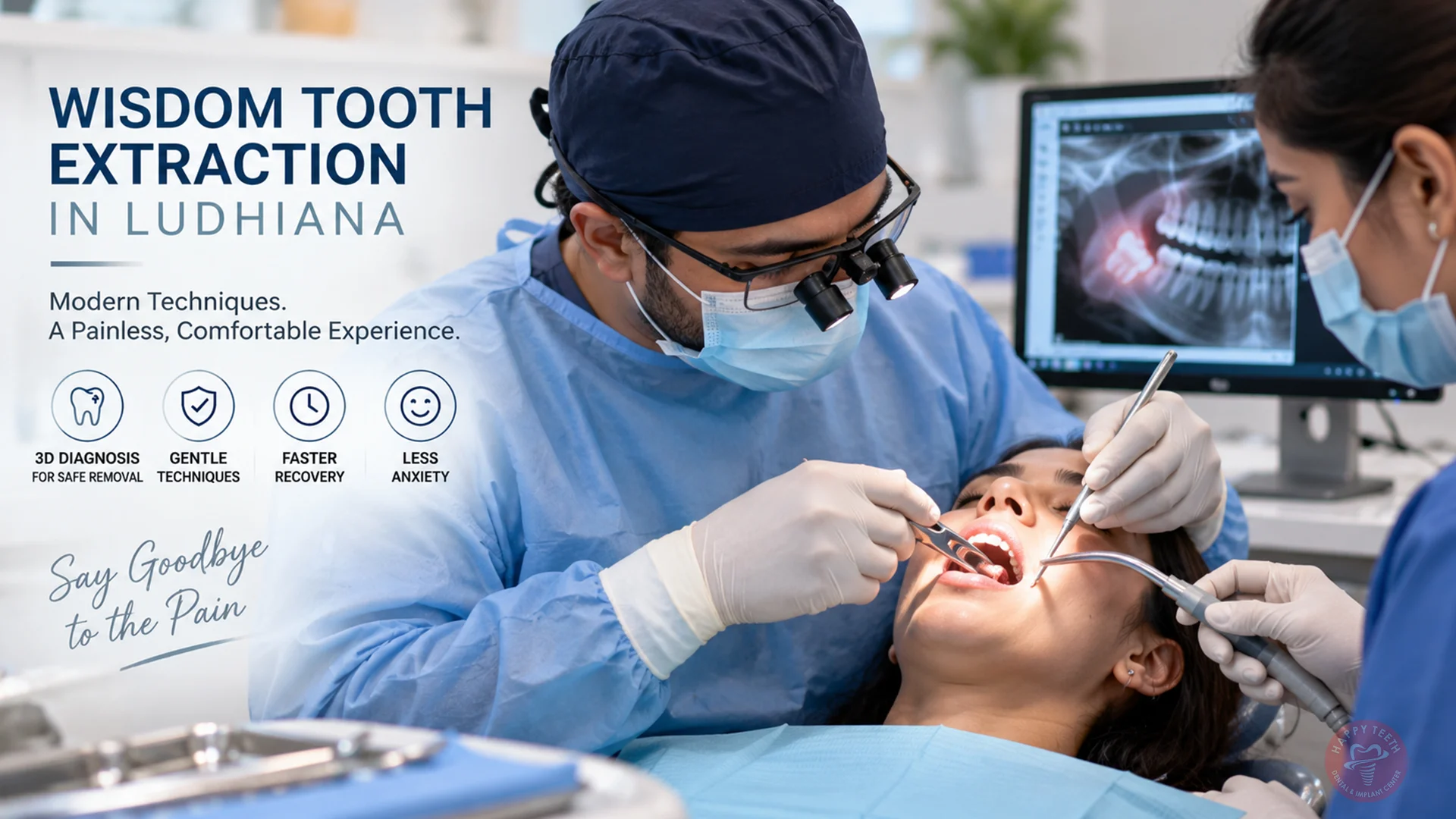
Wisdom Tooth Removal Without the Dread: Modern, Gentle Techniques
Mention the words “wisdom tooth removal” to a room full of young adults or working professionals, and you will almost certainly hear collective groans and dramatic stories of swollen cheeks, days spent in bed, and agonizing surgical pain. For generations, wisdom tooth extraction has carried a daunting reputation as an intimidating dental rite of passage. Because of these outdated stories, college students and busy professionals across Punjab frequently delay scheduling care—enduring recurring throbbing pain, jaw stiffness, and dangerous oral infections rather than seeking clinical help.
However, oral surgery has advanced dramatically over the last decade. The days of heavy mechanical force, brute pulling, and prolonged recovery periods are officially in the past. When you schedule a modern Wisdom Tooth Extraction in Ludhiana, the procedure is planned with digital surgical precision, performed with advanced local anesthesia, and executed using gentle, tissue-sparing techniques that protect delicate nerves and soft oral tissues.
At Happy Teeth Dental & Implant Centre, centrally located near Punjab Mata Nagar Chowk, we have reimagined the entire extraction experience to be calm, comfortable, and predictable. Guided by Dr. Simranjeet Singh, an expert Dentist in Ludhiana, our practice utilizes high-resolution digital radiography to map out your tooth root anatomy before treatment begins. Whether you are dealing with a painful impacted molar or planning ahead to protect your smile, this comprehensive guide explains how modern techniques take the dread out of third molar care.
- What Are Wisdom Teeth and Why Do They Cause Trouble?
Wisdom teeth, clinically referred to as third molars, are the final set of adult teeth to emerge at the very back of your dental arches. They typically attempt to erupt between the ages of 17 and 25—a life stage traditionally associated with stepping into adult wisdom.
While third molars served an evolutionary purpose for ancient ancestors who survived on tough, fibrous, and uncultivated foods, the human jaw has naturally evolved to become narrower and more compact. As a result, most modern jaws simply do not have enough physical space along the gumline to accommodate these four additional large molars.
The Anatomy of an Impacted Tooth
When a wisdom tooth lacks the room it needs to erupt normally into alignment, it becomes “impacted.” Instead of emerging straight upward through the gumline:
- Mesial Impaction: The tooth tilts forward at an angle, pushing directly into the root of the healthy second molar in front of it.
- Horizontal Impaction: The tooth lies completely flat on its side beneath the gumline, trapped against the jawbone.
- Vertical or Distal Impaction: The tooth sits upright or tilts backward, but remains permanently trapped under thick bone or dense fibrous gum tissue.
Leaving an impacted tooth unaddressed often leads to structural damage to adjacent healthy teeth, unseen jawbone cysts, and recurring bouts of acute pain.
- Spotting the Early Warning Signs of an Impacted Wisdom Tooth
Impacted teeth rarely remain quiet forever. Even if a third molar has not visibly broken through the surface of your gums, it can trigger chronic, low-grade biological complications beneath the surface.
Recognizing the early warning signs allows you to address the issue before it escalates into a severe facial swelling or an emergency room visit:
- Localized Gum Swelling and Tenderness: A partially erupted tooth often creates a small flap of gum tissue (an operculum) over the chewing surface. Food particles and plaque get trapped beneath this flap, leading to a localized bacterial infection known as pericoronitis. The surrounding gum tissue becomes fiery red, swollen, and extremely tender to the touch.
- Recurring Jaw Stiffness and Restricted Opening: As bacterial inflammation spreads from the gum flap into the deep masticatory muscles of the jaw, you may experience trismus—a noticeable stiffness that makes it painful or difficult to open your mouth fully to yawn or chew.
- Persistent Dull Aches Radiating to the Ear or Head: When an impacted tooth presses firmly against the roots of neighboring molars or lies in close proximity to the main mandibular nerve canal, it generates a deep, radiating ache that travels across the jawline, up to the ear, and throughout the temple.
- Chronic Bad Breath and Unpleasant Taste: Because the deep corners behind your second molars are nearly impossible to clean with a standard toothbrush, trapped debris breeds anaerobic bacteria. This produces persistent halitosis (bad breath) and a sour, salty taste in the mouth.
- Shifting Alignment of Front Teeth: Continuous eruptive pressure from angled molars can exert forward force across the dental arch, potentially disrupting the alignment of your front teeth or interfering with previous orthodontic treatment.
If you are experiencing any of these symptoms, a brief diagnostic checkup through our Routine Dental Care services will help determine whether your molars are safely erupting or actively impacted.
- High-Resolution Digital Diagnostics: Protecting Adjacent Nerves
The single most critical element of a safe, gentle Wisdom Tooth Extraction in Ludhiana happens before any instruments are ever prepared: precise digital diagnostic mapping.
In the lower jaw, the roots of wisdom teeth often sit extremely close to the Inferior Alveolar Nerve (IAN)—the primary sensory nerve responsible for providing feeling to your lower lip, chin, and teeth. In traditional dentistry, relying solely on small, distorted 2D film X-rays made it difficult to visualize the exact spatial relationship between curved roots and this vital nerve pathway, which occasionally resulted in nerve irritation and post-operative numbness.
The Digital Advantage at Happy Teeth Dental
Our practice utilizes advanced diagnostic imaging to eliminate anatomical uncertainty:
- Instant Digital Radiography: Using high-definition Digital X-Rays, Dr. Simranjeet Singh captures low-radiation structural views of your tooth crown, bone density, and root curvature in seconds.
- Panoramic Full-Mouth Mapping: Our wide-angle Full Mouth X-Rays (OPG) provide an unobstructed panoramic view of your entire upper and lower jaws. This comprehensive scan shows both the left and right wisdom teeth simultaneously, clearly highlighting sinus cavity proximity in the upper jaw and nerve canal pathways in the lower jaw.
- Computerized Surgical Treatment Planning: By reviewing high-resolution digital records on chairside monitors, our clinical team maps out the exact angle of entry and identifies curvature in the roots. This digital blueprint allows the surgical procedure to be planned down to the millimeter, minimizing surgical trauma and protecting nearby biological structures.
- Side-by-Side Comparison: Traditional Extraction vs. Modern Gentle Extraction
Understanding the differences between old-school dental extractions and modern surgical techniques shows why modern third molar care is a calm, routine procedure:
| Clinical Parameter | Traditional Wisdom Tooth Removal | Modern Gentle Extraction at Happy Teeth |
| Surgical Approach | Heavy mechanical pulling and aggressive bone chiseling | Gentle tooth sectioning with micro-precision instruments |
| Tissue Invasiveness | Large surgical incisions requiring extensive manual retraction | Micro-incisions designed to preserve soft tissues and bone |
| Diagnostic Imaging | Small, distorted 2D film X-rays with limited visibility | High-resolution digital X-rays and panoramic OPG scans |
| Patient Experience | High vibration, loud pressure sensations, and anxiety | Deep, profound local numbing; pressure-free and calm |
| Nerve & Sinus Safety | Higher risk of nerve bruising due to blind elevation | Exact digital mapping verifies proximity to the IAN nerve |
| Post-Operative Recovery | Severe facial swelling, deep bruising, and 7+ days off | Minimal swelling, rapid clotting, and 24 to 48-hour recovery |
- The Modern Gentle Technique: How Sectioning Eliminates Force
Many patients dread extractions because they imagine a dentist using forceful pulling to rip a tooth out of their jaw. In modern oral surgery, brute physical force is never used.
Instead, gentle extractions rely on a sophisticated surgical principle known as “tooth sectioning.”
The Gentle Surgical Sequence
- Profound, Targeted Local Anesthesia: Before anything begins, advanced, pH-buffered local anesthetic solutions are administered to completely numb the tooth, surrounding bone, and gum tissues. You remain fully awake, alert, and comfortable, feeling no sharp sensations whatsoever. Treatment begins only after complete numbness is confirmed.
- Conservative Micro-Access: If the tooth is buried beneath the gumline, Dr. Simranjeet Singh creates a microscopic, conservative access opening in the tissue.
- High-Speed Micro-Sectioning: Rather than trying to force a large, multi-rooted molar through a small opening in the bone, the tooth is divided into two or three tiny, manageable fragments using an ultra-smooth, water-cooled surgical handpiece.
- Effortless Removal of Small Segments: Because the tooth is divided into smaller pieces, each fragment lifts out smoothly with minimal pressure on the surrounding bone. This preserves the surrounding jawbone architecture and eliminates post-operative jaw soreness.
- Antiseptic Lavage and Resorbable Sutures: The socket is flushed with warm sterile saline to remove micro-debris. When necessary, tiny dissolvable sutures are placed to hold the gum margins closed. These dissolve naturally on their own within a week, saving you from a suture-removal appointment.
- Fast-Track Recovery Blueprint for Busy Students and Professionals
One of the biggest concerns for working executives in SBS Nagar and university students in Ludhiana is downtime. You cannot afford to spend a full week away from classes, business operations, or client obligations.
By following this straightforward recovery roadmap, most patients experience minimal discomfort and return to their normal daily routines within 24 to 48 hours:
The Critical First 24 Hours (Protecting the Blood Clot)
The foundation of a smooth, painless recovery is the formation and preservation of a stable blood clot inside the extraction socket. This clot seals the underlying bone and nerve endings, initiating tissue healing.
- Maintain Firm Gauze Pressure: Bite down gently but firmly on the sterile cotton gauze pack placed over the socket for 45 to 60 minutes after leaving the clinic, then discard it carefully.
- Zero Straws, Spitting, or Smoking: Never drink through a straw, spit forcefully into a sink, or smoke. The suction created inside your mouth will dislodge the fragile blood clot, exposing the raw bone—a painful complication known as a “dry socket.” If you need to clear your mouth, swallow gently or let fluids dribble into the sink.
- Cold Compress Application: Apply an ice pack wrapped in a clean cloth to the outside of your cheek for 15 minutes on, followed by 15 minutes off. This simple step minimizes soft-tissue swelling and provides natural numbing.
- Take Prescribed Medication on Schedule: Take your prescribed anti-inflammatory and pain medications as directed before your local anesthesia wears off to stay ahead of any soreness.
Days 2 Through 5 (Gentle Healing and Nutrition)
- Soothing Warm Saline Rinses: Beginning 24 hours after surgery, rinse your mouth gently with warm salt water (half a teaspoon of salt in a glass of lukewarm water) after every meal. Do not swish vigorously; tilt your head from side to side and let the water flow out naturally.
- Nourishing Soft Punjabi Foods: Stick to a smooth, soft diet that requires no chewing. Excellent local options include cool dahi (curd), smooth khichdi, warm dal soup, mashed potatoes, fresh fruit smoothies (enjoyed with a spoon, not a straw!), and kheer. Avoid hard, crunchy, or spicy foods like chips, nuts, or parathas that could irritate the socket.
- Rest with Head Elevated: Sleep with an extra pillow under your head to keep your upper body slightly elevated. This reduces blood pressure in the head, keeping swelling and throbbing to a minimum.
- Protecting Orthodontic Results and Neighboring Teeth
Young adults who invested time and money in orthodontic aligners or traditional braces during their teenage years often worry about wisdom teeth ruining their results.
While modern orthodontic research shows that erupting wisdom teeth do not always crowd front teeth on their own, an angled, impacted molar does exert continuous pressure on the second molar directly ahead of it. This forward pressure can cause:
- Deep root resorption (eating away at the healthy root of the adjacent tooth).
- Food impaction zones that lead to deep, hidden cavities in both teeth.
- Bite instability and relapse of previous orthodontic movements.
If you are currently undergoing smile alignment through our modern Orthodontics services, our clinical team monitors your third molars digitally to ensure your straight, beautiful smile remains stable for life.
- Authoritative Healthcare and Surgical Safety Guidelines
Modern third molar surgery is governed by international clinical parameters that emphasize diagnostic justification, patient safety, and conservative surgical protocols.
Global Authority Reference: According to clinical management guidelines published by the American Association of Oral and Maxillofacial Surgeons (AAOMS), timely diagnostic evaluation of third molars in late adolescence or early adulthood helps prevent periodontal defects, root resorption of adjacent teeth, and odontogenic cysts, ensuring safer surgical outcomes and faster healing.
Local India Authority Reference: The Indian Dental Association (IDA) provides comprehensive clinical practice standards for oral surgery across India, highlighting the vital role of panoramic radiography, sterile surgical protocols, and minimally invasive tooth sectioning to ensure predictable, infection-free third molar removals.
- Frequently Asked Questions (FAQ) About Wisdom Tooth Extraction in Ludhiana
Will I feel pain during the wisdom tooth removal?
No. Thanks to modern, fast-acting local anesthesia, you will not feel sharp pain during the procedure. You may feel a slight, dull sense of physical pressure as the tooth is gently guided out, but the nerve pathways are completely blocked. If you ever feel discomfort, Dr. Simranjeet Singh can pause and administer additional numbing immediately.
How many days of rest do I need before returning to work or college?
Most patients require only 24 to 48 hours of downtime. If you have your extraction performed on a Friday afternoon or Saturday morning, you can typically return to your normal office routine, classes, or light desk work by Monday morning with minimal swelling.
Do all four wisdom teeth need to be removed at the same time?
Not necessarily. Treatment depends entirely on your unique diagnostic scans and symptoms. If only one lower molar is impacted and causing recurrent infections, we can extract just that single tooth. However, if multiple molars are impacted, removing them in a single appointment saves you from going through separate recovery periods.
What is a “dry socket” and how can I prevent it?
A dry socket (alveolar osteitis) occurs when the protective blood clot dislodges prematurely from the socket, exposing the underlying bone and nerves to air, food, and fluids. It typically causes throbbing pain 3 to 4 days after extraction. You can easily prevent dry socket by avoiding smoking, skipping drinking straws, and refraining from forceful spitting during your first week of recovery.
How long does the actual extraction procedure take?
Thanks to digital planning and modern tooth-sectioning techniques, an uncomplicated extraction often takes just 20 to 30 minutes from start to finish. More complex horizontal impactions typically take between 40 to 60 minutes.
- Why Happy Teeth Dental is Ludhiana’s Choice for Gentle Oral Care
Facing an oral surgical procedure requires complete trust in your clinical team. At Happy Teeth Dental & Implant Centre, we believe that visiting the dentist should be an empowering, peaceful experience completely free of anxiety and dread.
Located near Punjab Mata Nagar Chowk near the Indoor Stadium, our modern practice is designed to provide a calm, reassuring environment. Dr. Simranjeet Singh and our dedicated clinical team take the time to walk you through your digital X-rays on screen, explain the procedure step-by-step, and listen to all your questions before treatment begins. We replace outdated surgical force with gentle precision, ensuring that your journey to a pain-free, healthy smile is smooth, fast, and completely stress-free.
Leave the Dread Behind: Reclaim Your Comfort Today
You no longer have to live with recurring jaw stiffness, throbbing molar pain, or swollen gums out of fear of an outdated procedure. Thanks to modern Wisdom Tooth Extraction in Ludhiana, removing impacted third molars is now a gentle, highly predictable, and rapid routine procedure.
At Happy Teeth Dental & Implant Centre, we are ready to help you protect your smile, eliminate discomfort, and get back to your busy life with complete peace of mind.
Do not wait for a minor molar ache to turn into a severe emergency. Book an Appointment Online with Dr. Simranjeet Singh near Punjab Mata Nagar Chowk today, and experience the gentle difference of modern dentistry!
Minimally invasive oral surgery designed for complete comfort and rapid recovery.
- Practice Name: Happy Teeth Dental & Implant Centre
- Chief Dental Specialist & Implantologist: Dr. Simranjeet Singh
- Location Profile: Punjab Mata Nagar Chowk, Near Indoor Stadium, SBS Nagar, Ludhiana, PB 141002
- Direct Clinical Helpline: (0) 87290 – 00980